Parts requests, finally in one clear system.
Deler gives your company one shared system for parts requests. Workers send requests from mobile in seconds. Leaders review, organize, and act on everything in one web app — tied to the right project.
Parts requests still get lost in the
middle of real work
In many trade companies, parts requests still come through phone calls, text messages, chat threads, handwritten notes, or verbal messages on site. That creates confusion, missing details, repeat questions, wasted supplier trips, and delays that cost time and money.
- Requests come through too many channels
- Quantities and details are often missing
- Leaders do not have one clear overview
- Workers get interrupted with follow-up questions
The result is simple: more friction, more mistakes, more delays, and more unnecessary cost.
From messy requests to one clear process
Before Deler
- Calls, SMS, and chat messages everywhere
- Parts requests missing key details
- Leaders piecing things together manually
- No shared project history
With Deler
- Structured requests in one system
- Every request tied to a project
- Clear quantities, items, and sender
- One overview for leaders
Simple for the field.
Controlled for the office.
Request
Workers open the app, search for parts, add quantities, and send the request tied to the correct project.
Review
Project leaders see incoming requests in one place, review items, and group what belongs together.
Order
Leaders use the structured request flow to prepare purchasing and coordinate with suppliers.
“A plumber needs fittings. Instead of texting or writing it down, they open Deler and send a request in seconds. The supervisor sees it immediately, reviews it with other project needs, and orders with full context. Nothing buried. Nothing forgotten.”
Two apps. One shared workflow.
Workers need speed. Leaders need overview. Deler is built so each side gets exactly what they need without forcing everyone into the same complicated interface.
Mobile app for field workers
Built for speed on site. Large touch targets, minimal steps, and a request flow that fits real field work.
- Fast parts requests
- Assigned project context
- Optional work unit context
- Request history and status
Web app for leaders
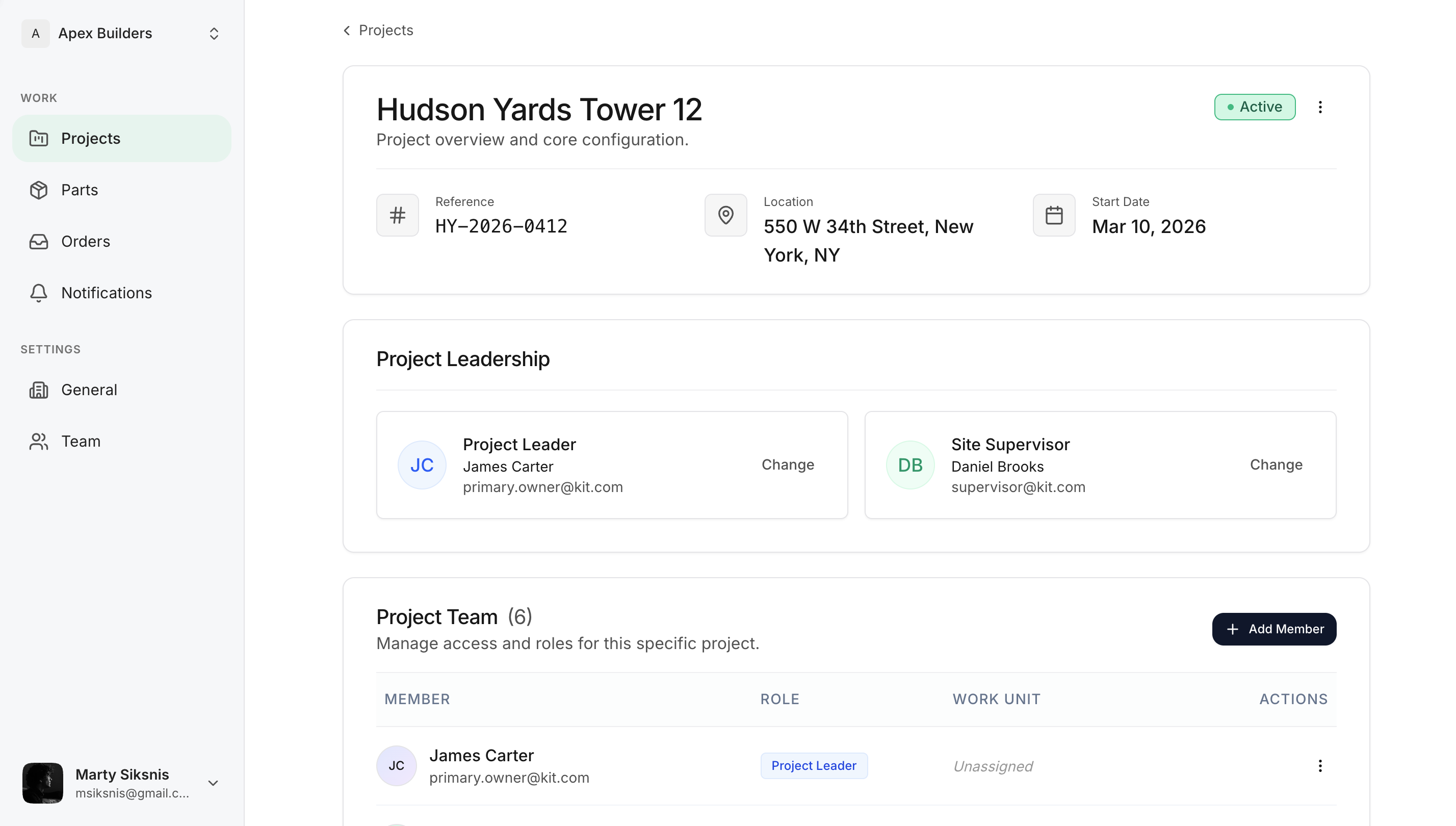
A structured overview of incoming requests, projects, people, and history — all in one place.
- Incoming request overview
- Review and organize requests
- Project and work unit structure
- Team roles and permissions
What companies get
Fewer delays
Requests stop getting buried in calls, texts, and side conversations.
Better accuracy
Part details, quantities, and project context stay attached to every request.
Faster coordination
Leaders review incoming demand in one place instead of chasing people.
Clear accountability
See who requested what, when, and for which project or work unit.
Easier adoption
Workers do not need to learn bloated software just to ask for parts.
Permanent history
Closed projects remain available as read-only history, so the record stays intact.
Built around how real jobs actually run
Every request in Deler belongs to a project. For larger jobs, the project can also be split into work units such as floors, buildings, phases, or zones.
That gives larger companies more structure without making the worker experience more complicated. When the job is done, the project can be closed and kept as read-only history.
Pricing that scales with your work
Pay for active projects and active work units — not for seats. Workers are always free. Billing is based on active work that needs coordination.
- Unlimited workers & requests
- Full history & platform access
- Up to 2 active work units included
For larger jobs that need more than 2 active work units inside a project.
You pay for active coordination, not for how many people you add to the system. Closed work is preserved as history and is not billed.
Frequently asked questions
Stop losing parts requests and put them in one clear system.
Give workers a faster way to request what they need. Give leaders full visibility over every request, project, and decision.
14 days free. No credit card required.